Archive for January, 2012

31 Jan
2012

Picking Solar Panels – Finding the Best Solar Panels

Posted by Norman Fong, January 31st, 2012

solar panels

The Earth receives more energy from the Sun in one hour than the whole World uses in a whole year.  Time to tap into that. Solar power is used to power everything from calculators to Coast Guard buoys to highway signs to the International Space Station.

You have read Are Solar Panels for me? and Solar Panel Installation – Planning and are ready for more details. Photovoltaic Solar panels were invented at Bell Labs in 1953. They have evolved over the years and several different types of solar panels exist, and choosing between then is confusing.  No one vendor will have access to all products, so you will have to do some shopping around to find the best solar panels.

Monocrystalline or Polycrystalline Panels

These solar panels are made either from single crystal cells or stringing ribbon of multiple crystals. They are the classic version of solar panels and are rated for good efficiency, around 12-13% power conversion, and a Long lifespan, possibly 30 years+?  Sunpower has a model with a very high 19.3% efficiency.  Monocrystalline panels are less efficient in hotter climates and work best in unobstructed sun. A panel’s power will drop by 50% if a even one cell on the panel is half shaded. Temperatures typically above 75 degrees F cause most solar panel power generation to decrease. Solar panel suppliers include: Sharp, Hitachi, Mitsubishi, Kyocera, Schott, SolarWorld, SunTech, Sunpower, bp solar, Mitsubishi electric, Evergreen solar.

Thin Film Panels

Less efficient than the Crystal Panels, but they much thinner and easier to make.  Less efficient than monocrystalline, at 10-12% efficiency. They work better when you have slight shading and are not affected by hot weather as much as monocrystalline. Major Drawback of performance degradation over time.  Possible lifespans of 10 years. Suppliers include: Nanosolar, Unisolar

Hybrid Panels

Hybrids of single crystalline silicon surrounded by ultra-thin amorphous silicon layers.  Produces 10% or more electricity  (kWh) than conventional crystalline silicon solar panels at the same temperature. Good efficiency levels of 16%. Hybrid Solar Panel Suppliers include: Sanyo

"Sharp

Solar Panel Quality Control

With the falling prices of solar panels, companies are being squeezed for profits. Recent audits have found that some solar panel manufacturers have been cutting corners. Defect rates have been averaging 8% on unshipped panels, while some have defect rates as high as 20%. These companies are fighting to stay in business. When considering a solar electric power system purchase, be sure to understand the warranty and the manufacturer’s reputation.

Panasonic Residential Fuel Cell

Fuel Cell Power Generators are now available for residential, home use. They claim to reduce your utility bills by up to 50%, and to cut CO2 emissions by over 33%. They take natural gas and produce electricity and heat for your home. ClearEdge is one of the providers of MicroCHP (combined heat and power) residential fuel cells.

A Federal Tax Credit for Energy Efficiency – Fuel cells and Microturbine System is also available. This can save homeowners 30% of the cost of the fuel cell unit, up to $500 per .5 kW of power capacity. This will typically yield a $5000 total tax credit. Businesses have a 30%, up to $3000 per kilowatt tax credit, making $15,000 tax credit available.

This Federal Tax Credit for Fuel Cells especially well when coupled with a state rebate program.

On the tax credit, existing homes & new construction qualify. Both principal residences and second homes qualify. Rentals do not qualify.

This Federal Tax Credit on Fuel Cells and Microturbine System reduces the amount of tax you owe. The credit is a reduction of total income tax at the bottom of your tax return. This tax credit is a non-refundable tax credit. Consult your tax adviser for details about Fuel Cell power. Use it or lose it!

How does it work?

Fuel-Cell Power Generators convert natural gas into clean hydrogen through lack catalytic process. Through a electrochemical reaction, the fuel cell creates electricity and heat. This unit helps reduce pollution and greenhouse gases. The power is converted to AC and connected to your home, while the heat is transferred using a hydronic system or a heat exchanger. Extra electricity is generated can be sold back to your utility company. The unit can work day or night, and in most environments.

The unit can generate electricity at 6 cents per kWh, compare that to San Francisco Pacific Gas and Electric rates from $.13-$.32 per kWh. This is based on $1.20 per therm for natural gas.

Ideal customers

To be cost effective, you need to spend approximately $1000 a month on your utility bill or use at least 44,000 kWh a month. You also need to have substantial heating demand for a pool, radiant flooring, etc. Businesses are clearly the biggest beneficiaries of this type of product.

How much can I save?

Most fuel-cell power generators that achieved a 30% electricity only generation capacity, qualify for a variety of rebates. Many utility companies have Self Generation Incentive Programs or SGIP available. These typically pay $2.50 per watt for fuel cells. A typical model would yield a $12,500 check from this program. Check with your local utility company.

These units are expensive at $50,000 for a 5 kW fuel-cell, costing roughly the same as they solar electric system of the same size. No doubt that they compare themselves the solar as pricing after rebates is pretty close.

25 Jan
2012

Residential Wind Power Federal Tax Credit for Consumer Energy Efficiency

Posted by Norman Fong, January 25th, 2012

windmill alternative energy

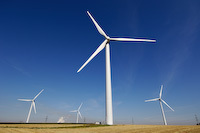
The new residential Small Wind Turbine Federal Tax Credit for Energy Efficiency is a large credit with many advantages.

  • The old tax credit was capped at $2,000.
  • With the new one one you can claim 30% of cost, up to $500 per .5 kW of power capacity, for a new system.
  • It expires 12/31/2016.
  • This Federal tax credit works well when coupled with a state rebate program. Combine this with state rebates like those in California or New York and you have a sweeter deal.
  • Moderate sized 10 kW wind power systems cost over $50,000.
  • The rebate has a nameplate capacity limit of no more than 100 kilowatts.

Existing homes & new construction qualify. Both principal residences and second homes qualify. Rentals do not qualify.

The Federal Tax Credits for Consumer Energy Efficiency reduces the amount of tax you owe. The credit is a reduction of total income tax at the bottom of your return. This tax credit is a non-refundable tax credit. Consult your tax adviser for details. Use it or lose it!

All Small Wind Turbines has a good list of most of the world’s small wind turbines. American Wind Energy Association has lots of information on Wind power.

Early Adopter Residential Wind Power Turbines

wind turbine, wind mill

We have a PV solar system on our roof, so I’m interested in other ways to generate energy. We live on the side of a canyon that is often windy in the late afternoon/evening. I have always been curious how much a Wind Turbine would cost, how much energy it could make, and how long the return on investment would be. An even bigger factor would be whether I could even get a city permit to install one. Major rebates and Federal tax credits are available to reduce the cost of installing wind power.

American Wind Energy Association has a nice Wind Energy FAQ. Some highlights:

  • You should have at least a 10 mph windspeed average
  • Electricity should cost at least 10 cents per kWh
  • Turbines are typically mounted on a 80 – 120 foot pole, ensure this is doable.
  • Be prepared to pay from $6000 to $22,000 for your wind turbine.

Market forces are rapidly dropping down the prices of wind turbines. China’s Xinjiang Goldwind Science and Technology, is now the No. 2 wind power supplier by shipments. Chinese windmills are on average are 20% cheaper than those build locally. Western companies have to work hard to differentiate themselves with innovative solutions to remain competitive in the wind power marketplace.

I didn’t realize it, but Clean Power Now reports that even Former President George H.W. Bush has a 33 foot tall windmill.

I noticed a wind turbine at the California Academy of Science the other day. I decided to do some research. Helix Wind make it and sells lower cost wind turbines that are more suitable for home and small businesses. They make 2.5kW ($6500-$8500) and 5kW systems.

What To Analyze Before Getting a Wind Turbine

  • Local zoning that permits small wind turbine installation.
  • Know how much power the system really puts out. Check windknowledge.com
  • Check local wind maps, verify height of wind measurement. Adequate wind (greater than 14 MPH)
  • Turbulent and gusty wind or wind that frequently changes direction.
  • Perform a site analysis by a wind turbine installer.
  • Have an expert check your roof or other structure.
  • Verify you qualify for wind turbine rebates.
  • Compare prices from multiple wind turbine dealers.
  • Electricity costs greater than $0.15/kWhr
  • An allowable installed height of less than 35 feet (although higher is ok too if zoning permits).
  • An existing interconnection agreement with your local utility (to check the net energy meeting regulations in your state please click here: http://www.awea.org/smallwind/states.html

Increase temperatures near Large Wind Farms

Researchers from Albany State University recently found that large wind farms in Texas slightly increase the temperatures near the ground due to warm air being pulled downwards. A 0.72 degree Celsius temperature increase was measured during the night. It is unknown how this will impact local weather.

Wind Turbine Health Problems? Wind Turbine Syndrome?

Clearly, Turbines are not for everyone.

wind turbine, wind mill

There is some new controversy over possible health problems caused by Wind Turbines. A recent article covers “Wind Turbine Syndrome” that possibly caused residents who live near wind farms to complain about a number of adverse health effects, including crippling headaches, nose bleeds and a constant ringing in the ears. It appears that wind turbines create low frequency sounds of high intensity. These may affect the human body by causing the inner ear to acquire a vibro-acoustic disease, which can cause sleep problems and dizziness.

Clearly more study needs to be done in this area. Perhaps the distance from a wind turbine to a home needs to be increased. So much for installing one in people’s backyards..

Interested in Solar?
Read our article Are Solar Panels for Me? and No money down Solar Panels.

23 Jan
2012

Save Money – Rainwater Harvesting – Drain Water Heat Recovery Systems

Posted by Norman Fong, January 23rd, 2012

rain water barrel

Rainwater harvesting or rainwater collection systems are simple ways of taking advantage of mother nature to reduce your water bill and become more green.

It looks a possible drought year for the San Francisco Bay area again.  Thoughts turn to capturing any rain we get to reduce our need for water and commensurately our water bill.

Rain Water Harvesting Barrels Or Cisterns

You can get started with an easy barrel or bucket under areas where rain comes off the roof.  You could easily make a downspout feed into a barrel.  Every 100 square feet of roof can yield 55 to 60 gallons of water per inch of rainfall. Irrigate using a shutoff valve and a garden hose. Amazon even sells Rain Water Harvesting Barrels.

Rain Garden

Store harvested rainwater in the soil by diverting roof downspouts towards shallow basins full of water tolerant plants.

More complex rainwater harvesting can be done using a living roof full of plants or a street curb side planter.

HarvestH20.com is a site with lots of tips on capturing rainwater.  Several interesting videos too.

ARCSA – American rainwater catchment system association has a link page with many useful resources and examples of what others have done.

Drain Water Heat Recovery Systems

Drain Water Heat Recovery Systems heat up water by using heat from your waste water. Not many people know about these interesting systems. They are usually hooked up to sinks, showers, dishwashers, and clothes washers.

Systems cost only $300 to $500 with paybacks ranging from 2 1/2 to 7 years depending on the particular situation. Some states offer rebate, making pay back even faster.

Rainwater capture – Costco Eco Round Wooden Rain Barrel

Costco is keeping up with the green wave. They have a Eco Round 67-Gallon Wooden Rain Barrel for $199.99 shipped. A lot more expensive than using a trash can but certainly a lot more elegant.

It has a connector that attaches to your rain gutter’s downspout. A heavy duty bladder inside actually holds the water. It even uses FSC Certified Canadian Spruce wood. A solid brass tab lets you access the water

21 Jan
2012

Federal Tax Credit for Energy Efficiency on GeoThermal Heat Pump

Posted by Norman Fong, January 21st, 2012

geo thermal heat pump

GeoThermal Heat Pumps are devices which transfer the heat from the Earth and utilize it to warm your house in a energy efficient manner.

A reminder that there is a Federal Tax Credit for Energy Efficiency on Qualifying GeoThermal Heat Pumps, with no cap. If you have been thinking about replacing these items, you might as well upgrade now and save some money.

For 2012, the Federal Tax Credit for energy efficiency for GeoThermal heat pumps is 30% of the cost (including installation/labor costs), with no upper limit . (2010 Federal Tax Credit information)

  • Existing home and principal residence.   New construction and rentals do not qualify.
  • Units must be placed into service by December 31, 2016.

Geo-thermal heat pumps are similar to ordinary heat pumps, but use the ground instead of outside air to provide heating, air conditioning and, in most cases, hot water. Because they use the Earth’s natural constant heat, they are among the most efficient and comfortable heating and cooling technologies currently available.   This allows the system to reach fairly high efficiencies (300%-600%) on the coldest of winter nights, compared to 175%-250% for air-source heat pumps on cool days.

Units can cost from $5,000 to $10,000 installed and take about 5-10 years for payback.

All ENERGY STAR geo-thermal heat pumps qualify for the tax credit.

Criteria for heat pumps:

Water-to-Air

·         Closed Loop: >=17.1 EER; >=3.6 COP

·         Open Loop: >=21.1 EER; >=4.1 COP

Water-to-Water

·         Closed Loop: >=16.1 EER; >=3.1 COP

·         Open Loop: >=20.1 EER; >=3.5 COP


·         Direct Geoexchange (DGX): >=16 EER; >= 3.6 COP

Energy Star has a store location finder to help you find local dealers.

The 2011 tax credit reverted to  2005-2008 levels. Anyone who previously took advantage of the program can’t apply for incentives that exceed $500.  IE If you claimed $500 between 2005 – 2008 on a previous energy efficiency project, or at least $500 tax credit from 2009 – 2010, you are ineligible for the 2011 energy efficiency tax credit.

If you used say $200 of the $500 energy efficiency tax credit from 2005 – 2008, and did not utilize the 2009 – 2010 energy efficiency tax credit, you would still have a $300 credit available.

Double dip! Local utilities like PG&E have their own rebates for Energy Efficient Products. To find out if rebates or other incentives are available in your area, visit the ENERGY STAR Rebate Finder.

See: Weatherize your home – Fix Leaky Ducts – Reducing Air Leaks