
BPA in Canned and Packaged Foods, BPA in Water Bottles
Posted by Norman F

Credit: Washington Post
Bisphenol-A (BPA) is a controversial chemical used to make plastics and has been in the news again. Many regard it as a dangerous chemical while the U.S. Food and Drug Administration (FDA) says it is safe at the levels people are exposed to it at.
More BPA controversy. Washington Post via SFgate has some good reports on the AMA study that implicates BPA to possible health issues.
Some takeaways:
Don’t microwave polycarbonate plastic food containers. Polycarbonate may break down from overuse at high temperatures and release BPA. (Manufacturers are not required to disclose whether an item contains BPA, but polycarbonate containers that do usually have a No. 7 on the bottom.)
— Reduce use of canned foods, especially acidic foods such as tomatoes, that can accelerate leaching of BPA from the plastic can linings. Opt for soups, vegetables and other items packaged in cardboard “brick” cartons, made of safer layers of aluminum and polyethylene plastic (labeled No. 2).
— Switch to glass, porcelain or stainless steel containers, particularly for hot food or liquids.
— Use baby bottles that are BPA-free; in the last year, most major manufacturers have developed plastic baby bottles made without BPA.
BPA in Canned and Packaged Foods
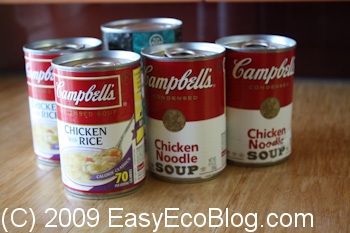
We have covered the BPA controversy in the past and recommended people avoid certain canned and packaged foods to help limit exposure. BPA may be linked to certain cancers, fertility and behavioral problems in children.
Consumerreports.org has an article that finds BPA in soups, juice, and more. The upshot is to eat more fresh food, use alternatives to canned items, and to use glass containers when heating food in microwaves.
Under Federal guidelines, 50 micrograms of BPA per kilogram of body weight is the limit. Scientists are concerned that this limit is way too high. Recent studies have shown that amounts as low as 2.4 have caused reproductive problems. Some scientists recommend a safe level of 1/1000 of this amount.
In a recent test of canned food that utilized BPA liners, Consumer Reports found some troubling information. Canned green beans and soup were found to have the highest level of BPA within them, with the highest level at 134 parts per billion. A typical adult eating a serving of green beans would ingest 80 times the suggested limit of daily BPA exposure. Chef Boyardee Beef Ravioli in plastic containers had even more BPA than versions within metal cans. Similac Liquid Formula sold in cans also contained BPA. If you have babies, you need to keep this in mind. Powered versions did not have BPA.
The conclusion is that BPA is present in many canned foods and beverages due to epoxy based can liners. Plastic containers or bags are a better bet. Plastic containers with metal peel back lids may have the same exposure based liners.
BPA Free Water Bottle

Bisphenol-a, or BPA is widely used in the making of the hard, clear and nearly unbreakable plastic called polycarbonate. Studies and tests show that small amounts of BPA are leaching from polycarbonate containers into foods and liquids and possibly causing health problems. BPA may be linked to certain cancers, fertility and behavioral problems in children.
Wall Street Journal reports that “New Research Raises Concerns About BPA Levels in Humans”. Industry disputes the claims. Who knows who is right? We are not waiting. It does not cost a lot to avoid some products with BPA.
We have covered the dangers of the chemical BPA many times in the past. Harvard finds BPA in the body is now being leeched due drinking from water bottles with BPA. Carefully examine your present bottle’s ingredients. A spot check of a local Target indicated that most bottles have moved to being labeled BPA free.
Amazon has a BPA-free product list with lots of water bottles and baby bottles.
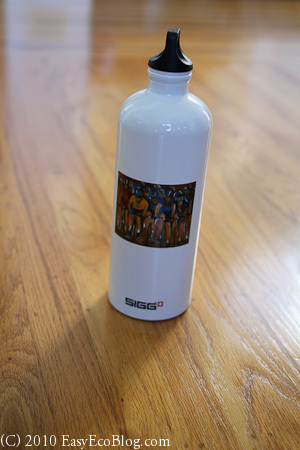
Sigg has a new BPA free metal water bottles with no plastic liner. Be more eco by saying no to BPA and bottled water. Save money too. Cafepress customizes the water bottles with custom graphics on it.
Most Whole Food stores sell these metal BPA free water bottles along with small ones to put in kid’s lunch boxes. Say no to wasteful and costly juice boxes.
Bottled water costs about $4 a gallon and people waste thousand of dollars on it each year. Only 30% of water bottles are recycled, causing many to end up in land fills or the ocean.
You might want to avoid drinking too much from water bottles with a sports top, straw on top, or a nozzle…
According to dermatologists, droves of women (and some men) are visiting their doctors, worried by the lines and wrinkles around their lips, typically called “smoker’s lip” due to the pattern of wrinkles found around the lips of smokers.
The problem is, these folks are not smokers. When you drink by sucking from certain water bottles, you are making the same gesture you are when you’re smoking. Over a short period of time, this sucking action creates wrinkles and lip lines around the mouth. Drink from these bottles too much and you will start to develop noticeable smoker’s lip within about 2 years.
Gaiam Aluminum Water Bottle Settlement
Gaiam Aluminum Water Bottle Settlement entitles some purchasers of their aluminum water bottles, to a free replacement bottle. There was some controversy as to whether these aluminum water bottles contained trace amounts of BPA. Claim forms must be postmarked by March 22, 2011.
Don’t forget to buy a BPA free ice cube tray.
Be sure to see our Tips to Avoid BPA Exposure
Here is another site that says that Consumer Reports’ study has errors.
BPS or Bisphenol S Warning
Some products that show the BPA free label may have other issues. We are starting to see BPA Free all over the place, it is almost a marketing label now. Products which contain Bisphenol S (BPS), an alternative to BPA, may be also hazardous. A study from the University of Texas in January 2013 showed that this chemical causes estrogen disruption in animals.
In a 2015 study in Endocrinology, for instance, researchers found that a bisphenol S (BPS), has nearly identical hormone-mimicking effects as BPA in zebrafish. This is a research model organism used to study genetics and cellular development. They found that BPS, like BPA, altered nerve cell development, changed the activity level of genes involved in developing the reproductive system, and caused early hatching (the fish equivalent of premature birth).
Endocrine disruptors are chemicals that may interfere with the body’s endocrine system and produce adverse developmental, reproductive, neurological, and immune effects in both humans and wildlife. A wide range of substances, both natural and man-made, are thought to cause endocrine disruption, including pharmaceuticals, dioxin and dioxin-like compounds, polychlorinated biphenyls, DDT and other pesticides, and plasticizers such as bisphenol A.
Endocrine disruption is thought to be the reason behind the increase in Thyroid Cancer.
Drinking from a Hose – PVC vs Polyurethane


What is wrong with this picture?
I heard a radio commercial talking about drinking water from only certain types of water hoses. Have not heard that one, so I decided to look into it. Clearly there is more to it than picking up a ‘plastic’ taste, possibly leaching chemicals like lead.
Many hoses are not designed for use with potable water. The ones that are must be made of FDA approved compounds and display “drink-safe”, “potable water”, or NSF potable water ratings. They should be lead and brass free. Most are made without PVC.
Always let the water run a little to clear out standing water in the hose, before drinking.
Do you have any other tips on avoiding BPA?
Filed under: Easy, Eco Friendly, Effort, Food, Green, Health, Home, Kids, Kitchen, Money, Shopping | Tags: BPA, Canned Food, Consumer's Report, Packaged food
If you enjoyed this post, be sure to subscribe to our RSS feed.
2 Responses to “BPA in Canned and Packaged Foods, BPA in Water Bottles”
Leave a Reply
Please do not put your URL in the comment text and please use your PERSONAL name or initials and not your business name.



August 5th, 2010 at 4:45 pm
[…] more about BPA in Canned in Packaged Foods […]
August 5th, 2010 at 5:19 pm
[…] Avoid foods from cans and plastic containers that may have BPA. […]